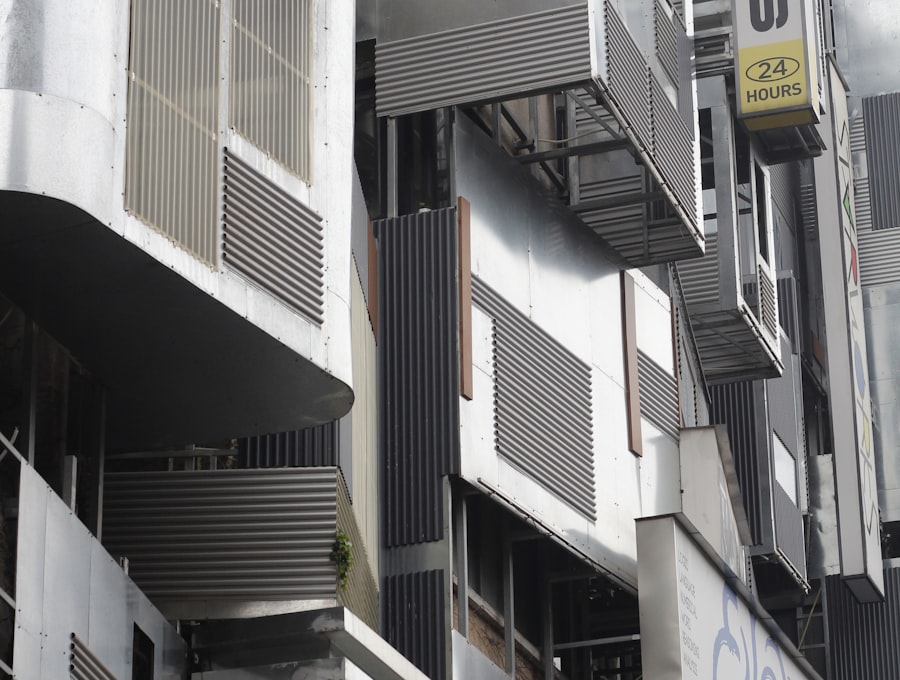
Direct answer
Single-skin metal panels are architectural sheets of one metal thickness — flat sheet and brake metal, roll-formed profiles, or heavier plate — with no factory-bonded core. Stiffness comes from gauge, folds and added stiffeners, not from a sandwich, so flatness has to be engineered rather than assumed: heavier gauge, smaller modules and back stiffeners are the levers against oil canning. The format's real advantage is fabrication freedom — folded returns, tapered panels and curves come off a brake or roll without composite tooling, in shop or in the field. The skin insulates nothing and seals little by itself; a backup wall carries the air, water and thermal work. Specify single-skin when custom geometry, honest material and budget matter; step up to cassettes or Metal Composite Material when large, dead-flat modules are the point of the elevation.
Key takeaways
- Single-skin covers flat sheet and brake metal, roll-formed profiles and heavier plate — one metal thickness, no factory core.
- Against composite and insulated products it is cheaper and more field-flexible, but flatness expectations must drop or be engineered.
- Gauge, back stiffeners and smaller modules are the three levers against oil canning on flat pans; leveled coil is the fourth.
- Fabrication freedom — folded returns, tapers, curves off a brake — is the format's real advantage over MCM, not price alone.
- The skin neither insulates nor air-seals. The backup wall does the enclosure work, and the spec must say so.
- Joint families run from exposed screws to concealed clips and interlocking flush panels; the joint sets the look and the labor.
- Step up to cassettes or MCM when the design demands large, dead-flat modules with crisp reveals.
| Criterion | Typical range | Note |
|---|---|---|
| Weight | Skin only | Rails and barrier still add load. |
| Durability | Metal- and coating-dependent | No core to hide a damaged face. |
| Corrosion | Follows the chosen metal | Edges and fasteners remain critical. |
| Fire | No plastic core in the sheet | Insulation behind the panel still counts. |
| Flatness | Engineered, not inherent | Gauge, stiffeners and module size set what the eye sees. |
| Formability | High | Folds, tapers and curves come off a brake without composite tooling. |
| Maintenance | Inspect coatings and joints | Dents read immediately. |
| Installation | Formed on site or in shop | Needs a designed attachment layout. |
| Cost | Often lower than composite | Heavy gauge, stiffeners and custom flats close the gap. |
Single-skin metal panels are formed sheets of one metal thickness, joined as a wall skin. They belong with the other panel systems on the metal wall coverings map. Manufacturer catalogs show how wide this format is in practice.
What does “single-skin” actually cover?
Four fabrication routes, one definition. Flat sheet and brake metal: coil or cut sheet folded on a press brake into pans, flashings and closures, in a shop or on a job-site brake. Roll-formed profiles: continuous shapes from flush panels with reveals up to full corrugated metal wall panels. Folded trays with returned edges, which at a certain rigidity become metal cassette panels and get their own page. And plate: thicker material, usually aluminum, stiff enough to stay flat by mass rather than by shape.
The sheet can be aluminum wall panels, coated steel wall cladding, stainless, zinc or copper. There is no factory foam and no bonded composite core. Stiffness comes from profile, folds, or added stiffeners.
That construction is different from Metal Composite Material panels and insulated metal panels. Mixing those datasheets in one specification section is a common error.
Where does it sit against composite and insulated products?
Three axes separate the formats. Cost: single-skin material is usually the cheapest way to put real metal on a wall, and profiled versions are often the market’s reference price. Flatness: MCM’s bonded sandwich delivers large dead-flat modules by construction; single-skin delivers flatness only where gauge, stiffening and module size are engineered for it, so the default expectation must be lower. Field flexibility: single-skin wins outright — a sheet can be cut, folded and refit on site, while a composite panel is a factory object that tolerates little field surgery.
The honest summary: buy MCM when the elevation is a large, flat, crisp grid; buy insulated panels when the panel must also be the envelope; buy single-skin when the metal itself is the product and the geometry is custom. Cost comparisons only mean anything at the installed-system level, because single-skin’s cheap sheet drags a backup wall, subframing and flashing package behind it.
Why do flat single-skin panels look wavy?
Because nothing in the format makes them flat. A wide, thin, unstiffened pan carries its coil memory, its fabrication stresses and its thermal expansion in the only direction available: out of plane. Raking sun turns that into visible oil canning. The full mechanics live in oil canning in metal panels; read it before promising a mirror elevation.
The levers, in the order most fabricators reach for them: heavier gauge, which raises cost fastest; smaller modules, which cut the free span of unsupported metal and often cost nothing but layout pride; back stiffeners, attached so the attachment itself does not read through the face; and leveled or tension-leveled coil, which removes waviness before forming and is cheap insurance on any visible flat. Low-gloss and lighter finishes from the metal panel finishes menu hide what remains; high-gloss dark colors advertise it. None of these are defects to negotiate after installation — they are decisions to write down before fabrication.
What is the format’s real advantage?
Fabrication freedom. A brake and a shear give a fabricator — or a sheet metal crew on site — the whole vocabulary: folded returns that turn a flat into a self-trimmed pan, tapered panels that follow a raking parapet, curved sections rolled to a radius, one-off closures for the corner the drawings never quite resolved. No composite tooling, no minimum factory run, no waiting on a bonding line. This is why custom facades, entrance surrounds and renovation work with awkward existing geometry keep coming back to single-skin even when MCM is available: the format bends to the building instead of forcing a module onto it.
Concealed-fastener product lines show how far the roll-formed end has come — flush and reveal panels with factory clips, leveled coil and defined reveals deliver a clean architectural face while staying one metal thickness. The trade for all this freedom is that quality lives in the shop drawings and the brake operator, not in a factory certificate.
What does the backup wall have to do?
Everything the skin does not, which is most of the enclosure. Single-skin insulates nothing: thermal resistance comes from insulation in the stud cavity or continuous insulation behind the panel, and the spec must keep those in their own sections. It seals little: most architectural installations are drained systems where the panel deflects weather and the backup wall’s air and water barriers do the actual sealing — read metal rainscreen cladding for the cavity logic. The Whole Building Design Guide’s metal panel wall systems page treats the panel as one layer of an enclosure, which is the right scale.
Fire follows the same discipline: the sheet has no plastic core, but performance belongs to the tested assembly — skin, cavity, insulation, barriers, backup — so ask for the assembly’s tested data, not a claim about the metal. Coordination is the recurring trap. The barrier trade, the framer and the panel installer touch the same square foot, and sequencing failures at openings are where drained walls quietly become face-sealed ones. The sequencing detail is covered in metal wall panel installation.
How are single-skin panels fastened and joined?
Three families. Exposed fasteners: gasketed screws through the face, cheapest and fastest, with the screw grid as part of the look — the corrugated page covers the discipline this demands. Concealed clips and interlocks: flush panels, reveal panels and standing-seam-derived wall profiles that hide the fastener in the joint, giving a clean face at moderate cost. Folded returns and hooks: brake-formed pans hung on rails or hooked over cleats, the boundary where single-skin grades into cassette construction.
The joint choice sets more than looks. It sets the labor hours, the drainage path, the thermal movement allowance — long panels and dark colors move, and the joint must absorb it — and the repair story, since an interlocked panel in mid-field is harder to swap than a screwed one.
When should you step up to cassettes or MCM?
Use the elevation drawing as the test. If it shows large flat modules, crisp shadow-line reveals and a grid that must stay dead-true across a wide facade, single-skin is the wrong tool: specify metal cassette panels for folded-tray rigidity in real metal, or Metal Composite Material panels for maximum flatness per pound. If the panel must carry insulation and span as the whole envelope, that is insulated metal panels, full stop.
Stay with single-skin when the drawing shows texture, custom geometry, tapers and returns, honest weathering metals, or a budget that has to buy real metal on exterior walls or interior feature surfaces without composite pricing. And when you stay, accept the format’s contract: the team designs the cavity, the spec caps the module sizes, and flatness is engineered on paper — never assumed at the punch list. Further specification notes continue on the design and specification hub.
Specification checklist
- Name the metal, gauge or thickness, and whether the panel is flat, profiled or folded.
- Require leveled or tension-leveled coil for visible flat pans.
- Cap module width and length for flat panels; prefer smaller modules on raking-light elevations.
- Locate stiffeners on shop drawings and forbid through-face stiffener fastening.
- State the joint type and whether the wall is drained or face-sealed.
- Define reveal widths and tolerances at joints, corners and openings.
- Set oil-canning expectations in writing, with a viewing-distance acceptance basis.
- State thermal movement allowance for long panels and dark colors.
- Separate the skin from any site-installed insulation in the spec sections.
- Require shop drawings for corners, returns, tapers and openings.
- Keep coil batch and finish direction consistent across adjacent panels.
Frequently asked questions
Are single-skin panels the same as metal siding?
Metal siding is one market name for formed single-skin walls. Architectural single-skin also includes cassettes and plate that are not sold as siding.
Do they insulate the building?
Not by themselves. Thermal resistance comes from insulation in the wall behind or from a different system such as insulated metal panels.
What gauge keeps a flat single-skin panel flat?
There is no universal number. Visible flatness depends on the metal, the module width, the finish gloss and the light hitting the wall, not gauge alone. Heavier gauge helps, but leveled coil, back stiffeners and smaller modules often do more. Judge it on a full-size mockup in raking light, not on a sample.
Can single-skin panels be curved or tapered?
Yes, and that is the format's advantage. Folded returns, tapered panels and curved sections come off a brake or roll former without composite tooling. Radius and taper limits depend on the metal and temper, so confirm them on shop drawings with the fabricator.
Is single-skin cheaper than MCM?
Usually at the sheet level, and often at the wall level for profiled formats. But a heavy-gauge flat pan with stiffeners, custom flashings and tight reveals can approach composite pricing. Compare installed systems, not material quotes.
Can single-skin panels be used as a rainscreen?
Yes, and most architectural installations are exactly that — open or gasketed joints over a drained, ventilated cavity, with the backup wall carrying the air and water barriers. The panel is the weather deflector and the face, not the seal.
Sources
- Metal Panel Wall Systems — Whole Building Design Guide Accessed August 25, 2026.
- Metal Construction Association — MCA Accessed August 27, 2026.